
Small vs Large Pergolas (UK): What the Terms Really Mean
Small vs Large Pergolas: What Do These Terms Mean?
When people search for a small pergola or a large pergola, they’re rarely thinking in exact measurements.
They’re usually asking:
-
Will this fit my garden?
-
Will it feel too big?
-
Will it dominate the space?
-
Will it still be usable?
In the UK, small and large pergolas are about proportion, not just metres.
This guide explains how these terms are typically used, when each makes sense, and how to avoid common sizing mistakes.
🇬🇧 Why “Small” and “Large” Mean Different Things in the UK
UK gardens tend to be:
-
Smaller than overseas equivalents
-
Closer to boundaries
-
More constrained by planning rules
-
Used year-round, not just in summer
As a result, what feels “large” in a UK garden may be considered normal elsewhere — and what feels “small” can often be the most practical option.
📐 What Is Considered a Small Pergola in the UK?


A small pergola typically prioritises:
-
Shallow depth
-
Balanced proportions
-
Minimal visual impact
Small pergolas are ideal for:
-
New-build gardens
-
Terraced houses
-
Side-return patios
-
Compact outdoor seating areas
In practice, a small pergola often:
-
Feels more sheltered
-
Preserves garden space
-
Integrates better with the house
Small does not mean cramped — it means well-judged.
📐 What Is Considered a Large Pergola?

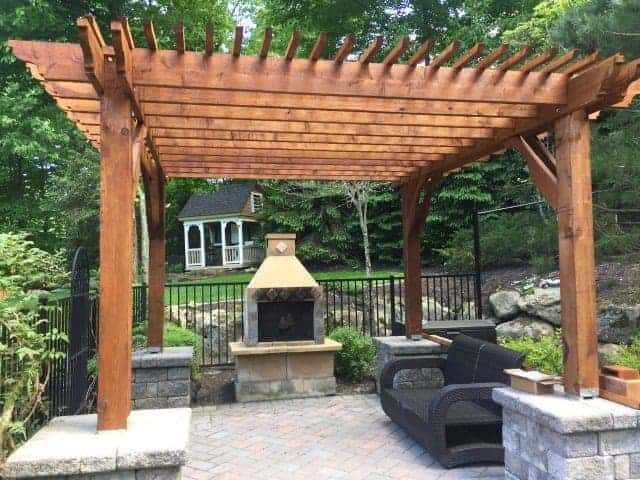
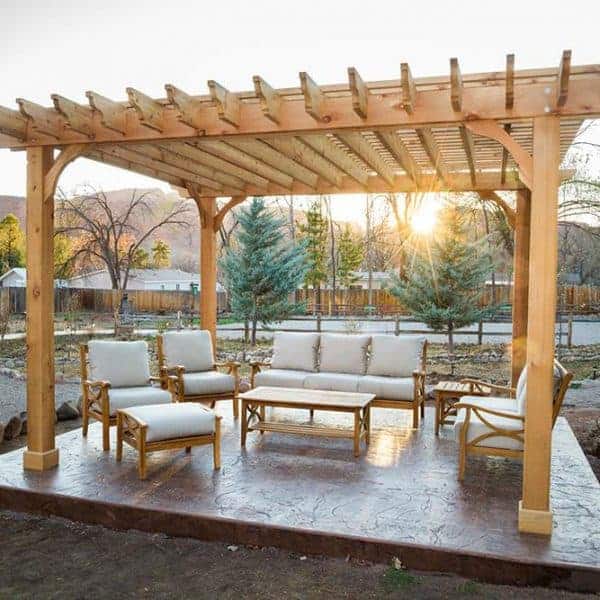
A large pergola usually refers to a structure that:
-
Covers a wide or deep area
-
Becomes a dominant feature
-
Acts as a central outdoor room
Large pergolas can work very well in:
-
Wide, open gardens
-
Zoned outdoor spaces
-
Entertaining or dining areas
-
Commercial or hospitality settings
However, in many domestic gardens, large pergolas are chosen too quickly.
⚠️ When Large Pergolas Become a Problem
In typical UK gardens, oversized pergolas can:
-
Overwhelm the space
-
Block light into the house
-
Reduce flexibility of garden use
-
Feel imposing rather than inviting
Often, the issue isn’t width — it’s excessive depth.
This is where half-sizes (such as 2.5m or 3.5m) often outperform full “large” options.
👉 See What Are Half-Size Pergolas? (2.5m & 3.5m Explained) for details.
🧠 Small vs Large: Which Is Better?
There’s no universal answer — but there is a correct approach.
Choose a small pergola if:
-
Your garden is compact
-
You want a sheltered, cosy feel
-
You want to preserve open space
-
Proportion matters more than scale
Choose a large pergola if:
-
The garden is genuinely spacious
-
You want a defined outdoor room
-
The pergola won’t dominate visually
-
Furniture and circulation have been planned
In many cases, medium or half-sizes offer the best balance.
📐 Why Depth Matters More Than “Small” or “Large”
Most people focus on width — but depth has a bigger impact on how a pergola feels.
Too much depth can:
-
Make the pergola feel heavy
-
Reduce light and openness
-
Waste usable garden space
Reducing depth slightly often:
-
Improves proportion
-
Enhances comfort
-
Makes the pergola feel intentional
🏡 Matching Pergola Size to Garden Type
-
Small gardens → compact or half-size pergolas
-
Medium gardens → half-sizes often ideal
-
Large gardens → zoning before scaling up
👉 See also:
✅ Key Takeaways: Small vs Large Pergolas
-
Small and large are about proportion, not labels
-
In the UK, smaller pergolas often work better
-
Oversized pergolas are a common mistake
-
Half-sizes bridge the gap effectively
-
The best pergola fits the garden — not the catalogue
Choosing the right size is about balance, not bravado.